
How car-reducing measures influence travel behaviour
Student information
Author: Chris Juárez Overdevest
Institution: TU Delft
Graduation year: 2026
The impact of car-reducing measures on travel behaviour across socio-demographic groups
Background
Cities in the Netherlands increasingly implement car-reducing measures to improve sustainability, public health, and urban liveability. However, while such interventions are becoming more common, their impacts are often evaluated in terms of traffic volumes or modal share rather than the behavioural mechanisms through which travellers adapt. In particular, limited attention has been given to how responses such as modal shift, rerouting and trip suppression differ across the various socio-demographic groups.
Case study
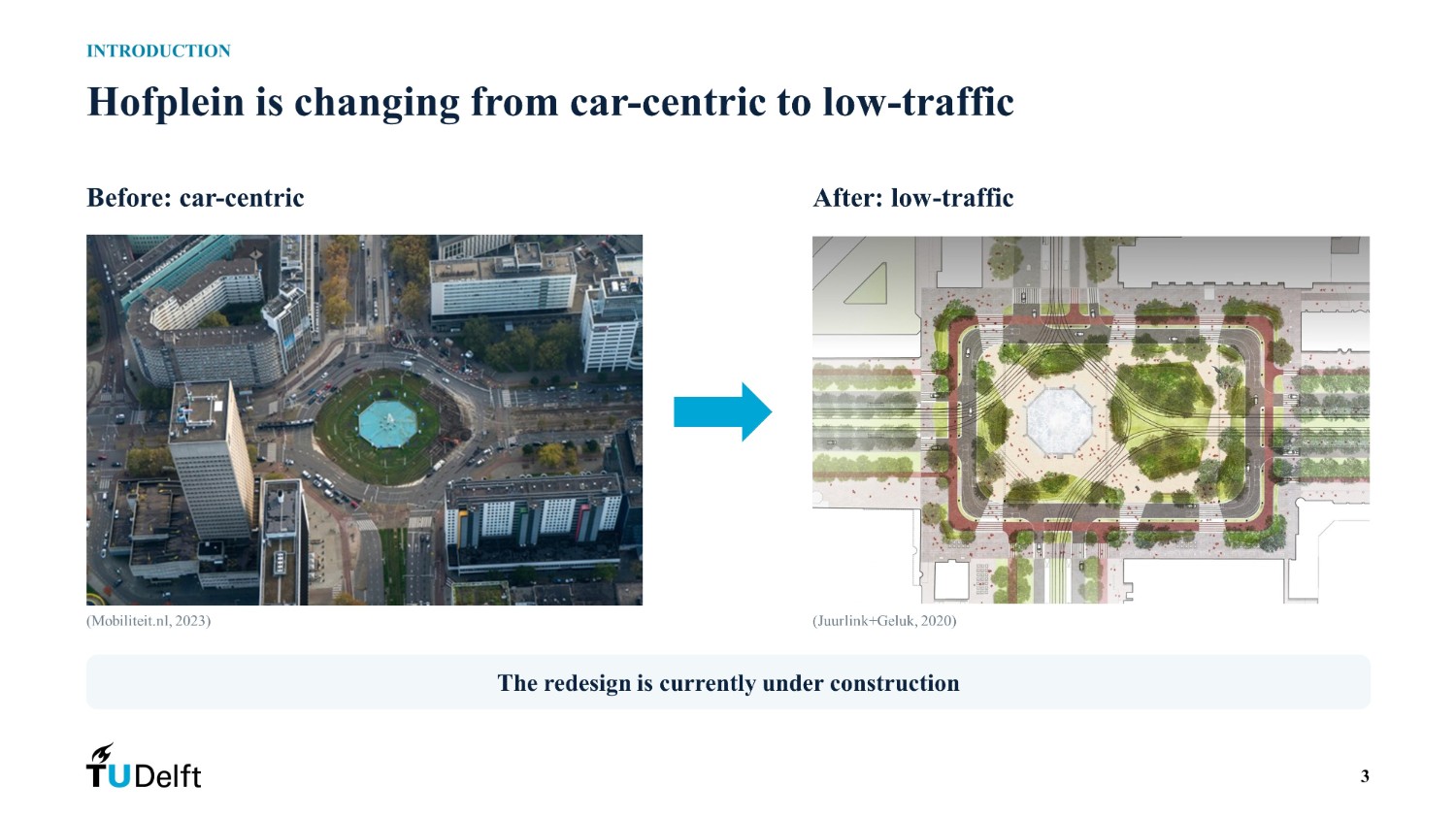
This research examines the impact of car-reducing measures on travellers’ behaviour using the redesign of Hofplein in Rotterdam as a case study.
Hofplein is one of the most recognisable squares in Rotterdam and occupies a central position in the city’s transport network. Besides numerous trams, cyclists, and pedestrians, more than 30,000 motor vehicles pass through the square each day.
Hofplein is very car-centric and is now being redesigned to reduce road capacity, lowering car accessibility and triggering behavioural responses, which are the focus of this research.
Figure 1: Hofplein before and after the redesign intervention
Model design
This study uses an activity-based transport model (ActivitySim) to simulate travel decisions of individual travellers, represented by KiM (Knowledge institute for Mobility) personas.
Figure 2: The KiM personas used in the study
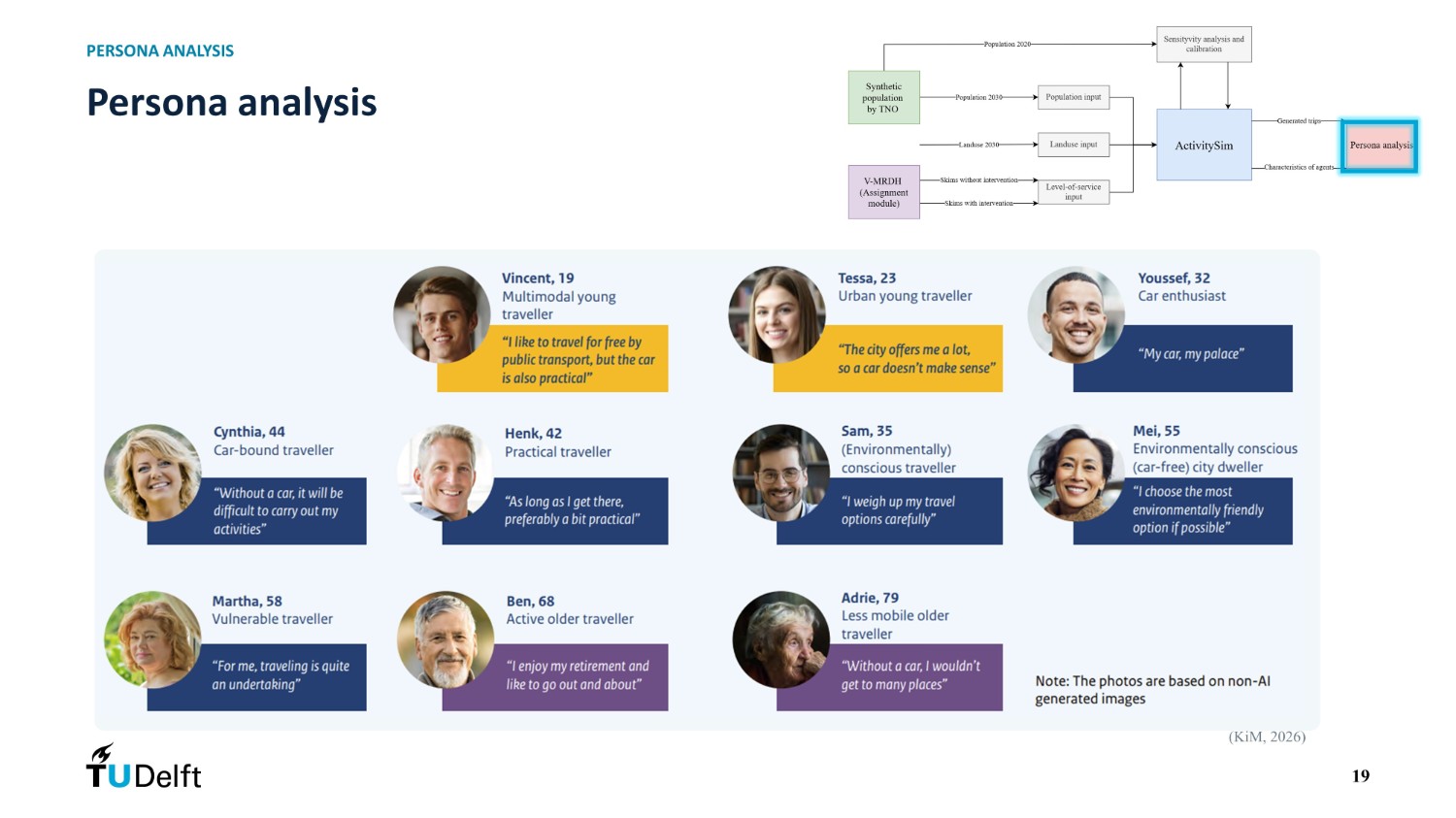
The personas represent typical travellers using Hofplein and facilitate analysis of the overall behavioural responses to the reduced car accessibility, showing how responses differ between traveller groups.
The model predicts that the intervention leads to a reduction in car use, accompanied by increases in walking, cycling, e-bike use, and public transport. However, these aggregate changes only provide a partial picture of the overall behavioural response.
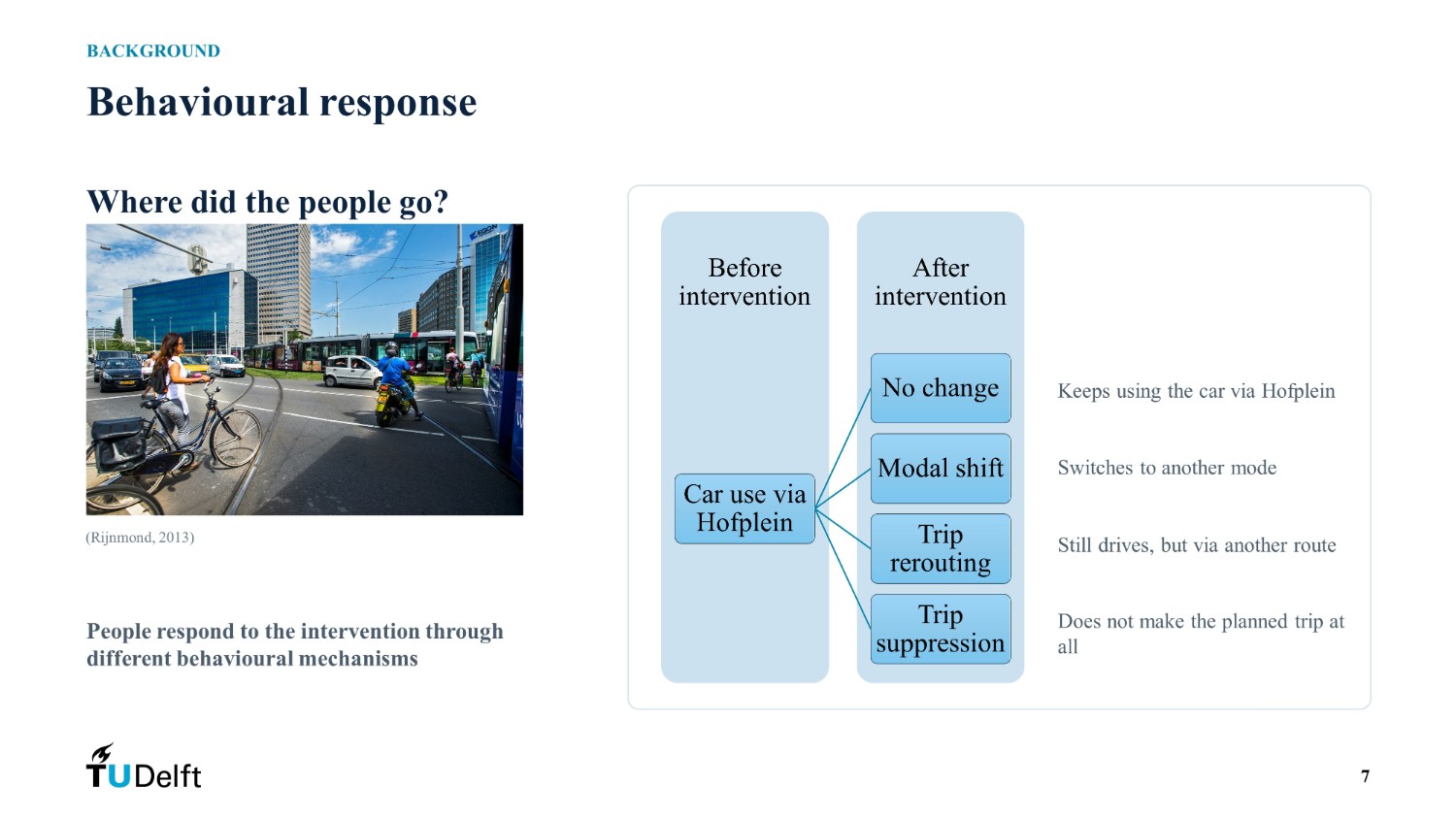
Figure 3 illustrates possible behavioural response to the travel options after the intervention.
Figure 3: Possible behavioural responses to the Hofplein redesign
Results
The simulation results suggest that many travellers continue to travel by car despite the reduction in accessibility, often by selecting alternative routes around the intervention area. This indicates that reduced car accessibility does not necessarily lead to travellers abandoning their car, but can also result in changes to how trips are made.
For those trips that are no longer made by car, the model predicts a variety of behavioural responses. Figure 4 shows that about half the trips are simply eliminated (grey) and that the remainder are made using alternative modes of transport.
Figure 4: Behavioural response to lost car trips
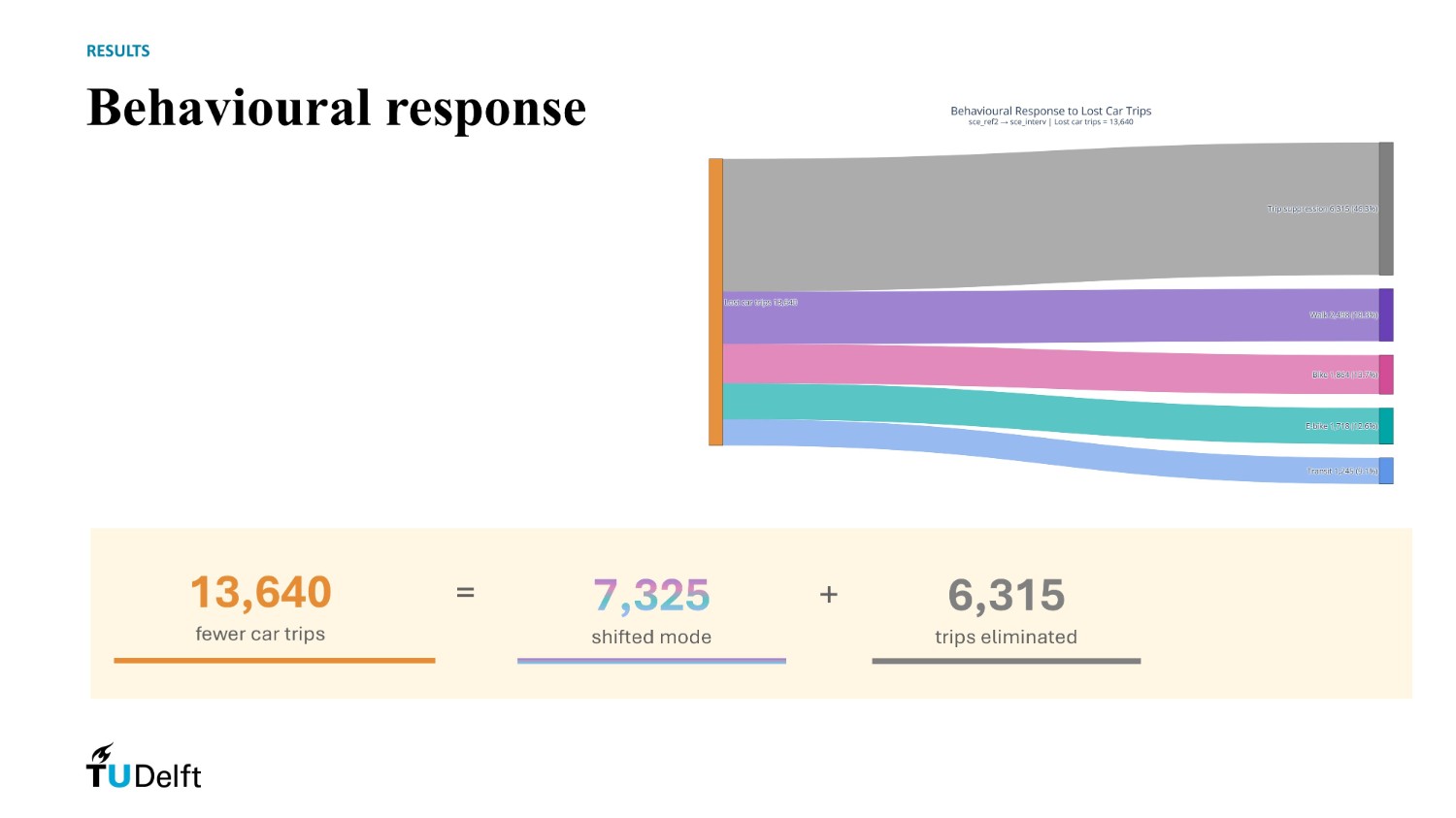
Key: grey = trip eliminated, purple = walk, pink = cycle, teal = e-bike, blue = public transport
The persona analysis further showed that these impacts are not evenly distributed across the population, and as people with reduced mobility (PRMs) are more dependent on travel by car, they are affected the most.
By linking simulated travellers to KiM mobility personas, it was possible to examine how different traveller groups responded to the intervention. Figure 5 compares the modelled modal shares before and after the intervention for each persona.
Figure 5: Modal share by persona before and after the intervention
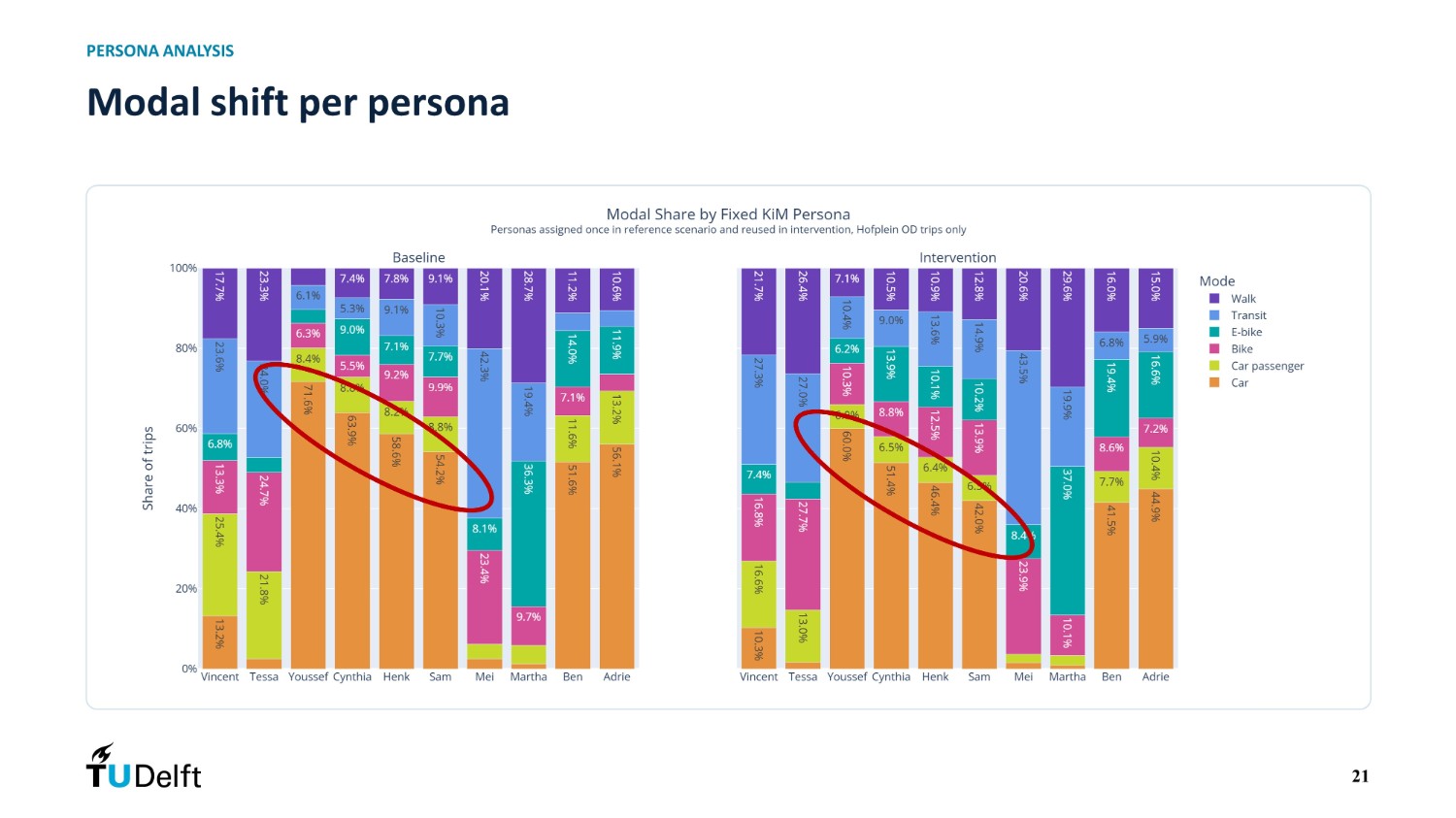
The strongest behavioural responses were predicted for car-oriented personas, whereas multimodal personas experienced comparatively small changes to their travel habits. Travellers most dependent on the car generally experienced the greatest reductions in accessibility and consequently exhibited the strongest behavioural adaptation.
This suggests that the effects of car-reducing measures depend not only on the intervention itself, but also on the characteristics and travel patterns of the travellers affected.
Key findings
It is crucial to assess and understand the impact of car-reducing measures on real people, as the effects differ considerably between personas. Car-dependent travellers, often the elderly and less mobile, suffer from reduced accessibility the most.
The activity-based modelling used yields insightful results because the population is not homogeneous. Further modelling is required to validate these findings with more real-world data, using specifically designed personas, and incorporating municipal developments such as additional housing.
Policy Recommendations
The findings highlight an important trade-off when evaluating car-reducing measures. Interventions such as the Hofplein redesign can contribute to urban liveability, traffic safety, and environmental sustainability, but they may also reduce accessibility for certain traveller groups.
The results suggest that these accessibility impacts are unevenly distributed across the population. While many travellers can adapt through alternative routes or transport modes, car-dependent travellers, often those with reduced mobility (PRMs), experience the largest accessibility reductions and are more likely to suppress trips altogether.
Policymakers should therefore not only evaluate the overall benefits of car-reducing measures, but also consider who suffers from the resulting accessibility impacts. Ensuring that attractive and accessible alternatives are available is particularly important for travellers who rely most heavily on the car.